Canada 🇨🇦
Canada

The flag of Canada is composed of a red vertical band on the hoist and fly sides and a central white square that is twice the width of the vertical bands. A large eleven-pointed red maple leaf is centered in the white square.
Location
Quick Facts
Alpha 2
CAAlpha 3
CANNumber
124TLD
.caCapital
OttawaPopulation
38,005,238Area
9,984,670 km²Languages
Currencies
Drives on
RightWeek starts
SundayTimezones
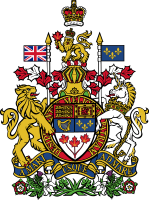
UTC-08:00, UTC-07:00, UTC-06:00 +3 moreCoat of Arms
What is the Flag of Canada?
The flag of Canada is a symbol of national identity and pride for Canadians. It is a red and white maple leaf flag with a red maple leaf in the center. The flag of Canada was officially adopted on February 15, 1965.
What does the Canada Flag Look Like?
The flag of Canada is a red and white flag with a red maple leaf in the center. The maple leaf is the national symbol of Canada and the colors of red and white are also symbolic of Canada. The maple leaf is outlined in white and there are two vertical bands of red on either side. The white areas of the flag represent peace and purity while the red areas of the flag represent courage and strength.
What is the Canada Flag Called?
The official name of the Canadian flag is the National Flag of Canada. It is also referred to as the Maple Leaf Flag or the Canadian Red and White Flag.
What Does the Canada Flag Represent?
The flag of Canada is a symbol of national identity and pride for Canadians. It is also a symbol of unity and peace. The maple leaf in the center of the flag is a national symbol of Canada and it represents the unity of all Canadians. The red and white colors of the flag represent peace and purity, while the red areas of the flag represent courage and strength. The flag also serves as a reminder of the freedom and democracy of Canada.
Who Created the Canadian Flag?
The Canadian flag, also known as the Maple Leaf, is an iconic symbol of Canadian pride and patriotism. It is one of the most recognizable flags in the world and has become a symbol of Canada’s identity.
The design of the Canadian flag was created by George Stanley, a professor of history at Royal Military College of Canada, and approved by the Canadian parliament on October 22, 1964. The design is based on the Royal Military College’s flag, which was adopted in 1868. The flag’s design features a white rectangular field with a red maple leaf in the center. The maple leaf has long been a symbol of Canada and its national identity.
The design of the Canadian flag was the result of a lengthy process. In 1925, the Canadian government appointed a committee to create a national flag. The committee included representatives from the military, the government, and a number of other organizations. After a lengthy debate, the committee recommended a design featuring a red ensign with a shield containing the arms of the provinces and a maple leaf. This design was rejected by the cabinet in 1946, as it was deemed too similar to the British Union Jack.
In 1964, Prime Minister Lester B. Pearson appointed a new committee to create a new flag. This time, the committee was tasked with creating a design that was uniquely Canadian. After considering a variety of options, the committee members agreed on the design of the current flag. The design consists of a white background with a red maple leaf in the center.
The design of the Canadian flag was inspired by the maple leaf. The maple leaf has long been a symbol of Canada and its national identity. It is believed to represent the country’s strength and unity, as well as its history and culture. The maple leaf has been used in a variety of contexts, including on coins, in paintings, and as part of the Canadian coat of arms.
The design of the Canadian flag has become a symbol of national pride and unity. It is widely recognized around the world and is often used to represent Canada in international events. The flag is a powerful symbol of Canada’s identity and its place in the world.
Bordering Countries

Similar Flags
Flags that share colours with Canada