Gambia 🇬🇲

Republic of The Gambia

Gambia Flag

The flag of Gambia is composed of three equal horizontal bands of red, blue with white top and bottom edges, and green.

Location

Quick Facts

Alpha 2

GM

Alpha 3

GMB

Number

270

TLD

.gm

Capital

Banjul

Population

2,416,664

Area

10,689 km²

Languages

English

Currencies

dalasi (D)

Drives on

Right

Week starts

Monday

Timezones

UTC+00:00

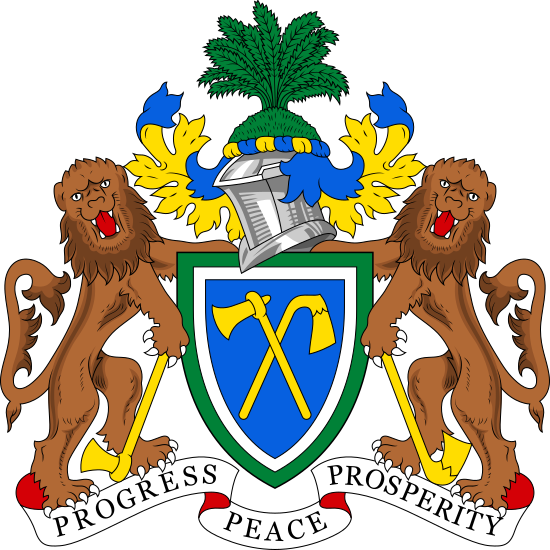
Coat of Arms

Coat of Arms of Gambia

What is the Flag of Gambia?

The flag of Gambia is a widely-recognized national symbol of the country, having been adopted in 1965 when Gambia achieved independence from the United Kingdom. The flag is a tricolour of red, blue, and green, with a five-pointed black star in the center. The colours have cultural and political significance, representing the nation’s culture, geographical location, and political ideals.

What Does the Gambia Flag Look Like?

The Gambia flag features three horizontal stripes of equal width. The top stripe is red, the middle stripe is blue, and the bottom stripe is green. In the center of the flag is a five-pointed black star. This star is known as a Pan-African symbol, as it is used in many African countries to represent unity and the collective aspirations of the African people.

What is the Gambia Flag Called?

The Gambia flag is officially known as the "Flag of Independence." This name reflects the country's fight for independence from the United Kingdom that was achieved in 1965. The flag serves as a reminder of the struggles and achievements that Gambians made in their bid for independence.

What Does the Gambia Flag Represent?

The Gambia flag is a representation of the country’s culture and geographical location. The red stripe is a symbol of the hard-fought victory of the people of Gambia in achieving independence. The blue stripe is a representation of the Gambia River, which flows through the country. The green stripe is a symbol of the lush vegetation of the Gambian countryside. The five-pointed star in the middle of the flag is a Pan-African symbol, representing unity and the collective aspirations of the African people.

Who Created the Gambian Flag?

The current Gambian flag was adopted on February 18, 1965, shortly after the country gained its independence from Britain. The flag was designed by Louis Thomasi, an artist from the capital city of Banjul. Louis Thomasi was born in Banjul in 1939 and had a long career as an artist and designer. He was well-known for his work on the Gambian flag, as well as other flags from the region.

The flag of Gambia is composed of three equal horizontal stripes; red, blue and green. In the middle of the flag is a white five-pointed star on a black circle. The red stripe at the top of the flag symbolizes the sun and the sacrifices of the nation, while the blue stripe in the middle symbolizes the Gambia River, which is the country's main source of water. The green stripe at the bottom of the flag represents the country's agricultural wealth and natural beauty. The white star in the middle of the circle represents unity and progress, while the black circle represents the African continent.

Louis Thomasi was inspired by the Pan-African colors of red, black and green when he designed the Gambian flag. He wanted to create a design that was representative of the country's past, present and future. He wanted to create a flag that was representative of unity and progress, while still being visually appealing.

Louis Thomasi was an important figure in the history of the Gambian flag and its design. He was the first to envision the design of the flag, and he succeeded in creating a flag that has become an important symbol of the country. His design has been used by the Gambian government and people for over 50 years and is a proud symbol of Gambian independence.

The Colours of Gambia

The Hex Colours of Gambia

Bordering Countries