Nicaragua 🇳🇮

Republic of Nicaragua
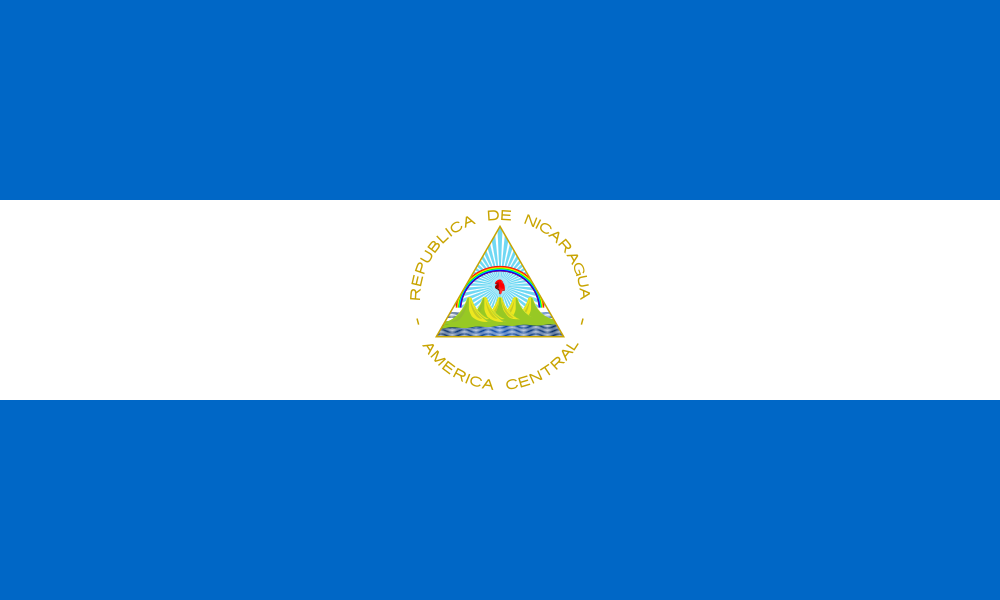
Nicaragua Flag

The flag of Nicaragua is composed of three equal horizontal bands of blue, white and blue, with the national coat of arms centered in the white band.

Location

Quick Facts

Alpha 2

NI

Alpha 3

NIC

Number

558

TLD

.ni

Capital

Managua

Population

6,624,554

Area

130,373 km²

Languages

Spanish

Currencies

Nicaraguan córdoba (C$)

Drives on

Right

Week starts

Monday

Timezones

UTC-06:00

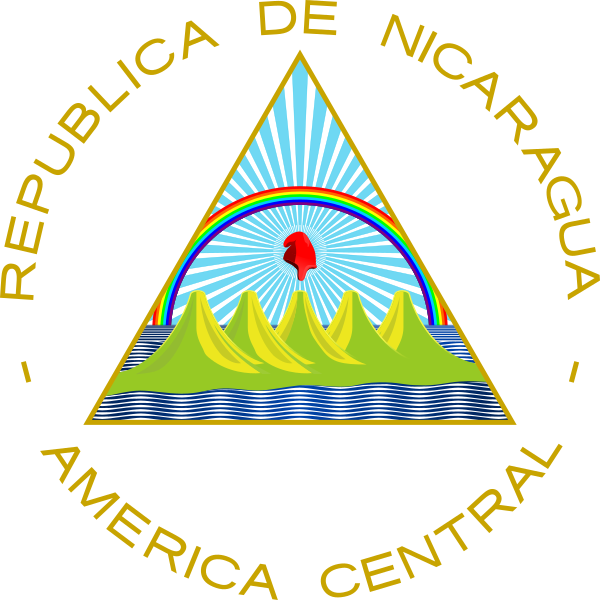
Coat of Arms

Coat of Arms of Nicaragua

What is the Flag of Nicaragua?

The flag of Nicaragua is a horizontal tricolor flag of three equal bands of blue, white, and blue, with the national coat of arms centered in the white band. The flag is often referred to as the tricolor because of its three colors. It was adopted in 1971 and is one of the national symbols of Nicaragua.

What Does the Nicaragua Flag Look Like?

The flag of Nicaragua consists of three equal horizontal bands of blue, white and blue. The blue bands represent the Pacific Ocean and Caribbean Sea, and the white band in the center symbolizes peace and unity. The national coat of arms is centered in the white band. The coat of arms features a triangle with a five-pointed star, a rainbow, and a triangle with a volcano, lake, and two capes. The five-pointed star stands for the ideals of liberty, equality, justice, fraternity, and democracy. The rainbow symbolizes the hope for peace, and the volcanoes, lake, and capes represent Nicaragua's geography.

What is the Nicaragua Flag Called?

The flag of Nicaragua is officially known as the Bandera Nacional de Nicaragua. It is often referred to as the Tricolor due to its three horizontal bands of blue, white, and blue.

What Does the Nicaragua Flag Represent?

The flag of Nicaragua is a symbol of the country's national pride and unity. The blue bands represent the Pacific Ocean and Caribbean Sea, and the white band in the center symbolizes peace and unity. The national coat of arms is centered in the white band, and features a triangle with a five-pointed star, a rainbow, and a triangle with a volcano, lake, and two capes. The five-pointed star stands for the ideals of liberty, equality, justice, fraternity, and democracy. The rainbow symbolizes the hope for peace, and the volcanoes, lake, and capes represent Nicaragua's geography. The flag is a symbol of the country's commitment to peace, unity, and democracy.

Who Created the Nicaraguan Flag?

The design of the Nicaraguan flag is credited to Zelaya Rosales, a poet and politician from the 19th century. Rosales was born in León, Nicaragua, in 1808 and was a prominent figure in the country's politics and culture. He was known for his patriotism and commitment to the Nicaraguan people.

In 1823, Nicaragua declared its independence from Spain, and Rosales, then just 15-years-old, was appointed to the Supreme Council of the Republic of Nicaragua. In 1854, Rosales was appointed as the Minister of Foreign Affairs and it was during this time that he designed the Nicaraguan flag.

Rosales' design was based on the colors of the National Party of Nicaragua, which were blue and white. The flag also included two triangles, one pointing up with a white background and the other pointing down with a blue background. Between the two triangles was the coat of arms of Nicaragua which featured an equilateral triangle with a five-pointed star.

The symbolism behind the flag is quite meaningful. The blue triangle represents the Pacific Ocean which borders Nicaragua, the white triangle symbolizes the Caribbean Sea which also borders the country, and the star is a symbol of freedom and liberty. The flag also serves to represent the country's struggle for liberty and independence.

The design was first flown on September 15, 1854 and remains the national flag of Nicaragua today. Although the design has gone through some minor changes, the basic design remains the same as when it was first created by Rosales.

Rosales is remembered in Nicaragua for his patriotism and commitment to the country. His design for the Nicaraguan flag is a testament to his love for his country and serves as an enduring symbol of Nicaraguan pride and identity.

The Colours of Nicaragua

The Hex Colours of Nicaragua

Bordering Countries