Suriname 🇸🇷
Republic of Suriname
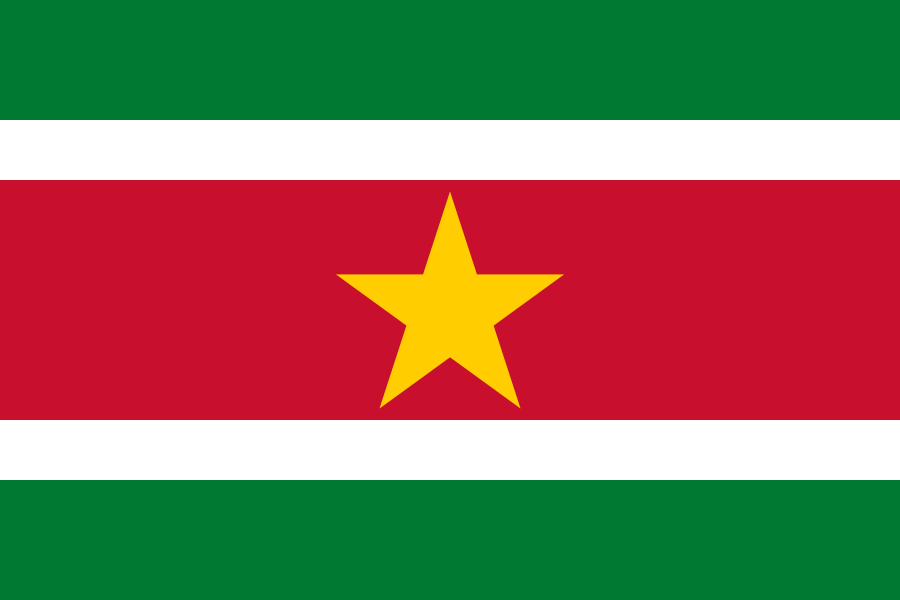
The flag of Suriname is composed of five horizontal bands of green, white, red, white and green in the ratio of 2:1:4:1:2. A large five-pointed yellow star is centered in the red band.
Location
Quick Facts
Alpha 2
SRAlpha 3
SURNumber
740TLD
.srCapital
ParamariboPopulation
586,634Area
163,820 km²Languages
Currencies
Drives on
LeftWeek starts
MondayTimezones
UTC-03:00Coat of Arms

What is the Flag of Suriname?
The flag of Suriname is a horizontal bicolor of five equal bands. The top and bottom stripes are green, the middle three are white, and at the center is a red star superimposed on a yellow five-pointed star. The flag is officially referred to as the “Flag of Suriname,” and it is a symbol of the nation’s independence.
What Does the Suriname Flag Look Like?
The flag of Suriname is a horizontal bicolor of five equal stripes. The top and bottom stripes are green, the middle three are white, and at the center is a red star superimposed on a yellow five-pointed star. The green stripes represent the forests and the fertility of the land, while the white stripes represent peace. The yellow star represents the unity of the people and the red star stands for progress and socialism. The flag is often referred to as the “flag of Suriname.”
What is the Suriname Flag Called?
The flag of Suriname is officially referred to as the “Flag of Suriname.” The flag was adopted on November 25, 1975, and it is the official symbol of the nation’s independence. The flag is flown by all citizens of Suriname to represent their country.
What Does the Suriname Flag Represent?
The Suriname flag is a horizontal bicolor of five equal stripes. The top and bottom stripes are green, the middle three are white, and in the center is a red star superimposed on a yellow five-pointed star. The green stripes represent the forests and the fertility of the land, while the white stripes represent peace. The yellow star represents the unity of the people and the red star stands for progress and socialism. The flag of Suriname is a symbol of the nation’s independence and is flown by all citizens of Suriname to represent their country.
Who Created the Surinamese Flag?
The Suriname flag was designed and created by the late Dr. Coby Adama, who was born in Paramaribo, Suriname in 1924. He was an artist, writer, and politician, and is best known for designing the modern flag of Suriname.
Adama was born to a very wealthy family and his father was an influential figure in Suriname politics. As a young adult, he attended the University of Amsterdam and graduated with a degree in Law. During his time at the university, Adama developed an interest in politics and art, and it is here that he began to develop his ideas for the flag of Suriname.
Adama’s design of the flag was inspired by the traditional Surinamese flag which was used until the country gained independence in 1975. The original flag consisted of five horizontal stripes of green, yellow and red. Adama wanted to tweak the traditional design to create something that was more representative of the country’s history and culture.
He used the same three colors, but instead of a horizontal design, he chose a symmetrical one. The top stripe is green, which symbolizes the country’s natural beauty. The middle stripe is yellow for the nation’s mineral wealth. The bottom stripe is red for the blood of those who fought for Suriname’s independence. The central white star is a symbol of unity and hope for the nation.
Adama knew that the flag would be a source of pride and unity for the people of Suriname. He wanted the flag to represent the people’s struggles and triumphs. Adama’s design of the Suriname flag was adopted in 1975 and has been proudly flown ever since. It is a symbol of the nation’s strength and resilience, and a reminder of the hard work and dedication of its people.
Similar Flags
Flags that share colours with Suriname