Fiji 🇫🇯
Republic of Fiji

The flag of Fiji has a light blue field. It features the flag of the United Kingdom — the Union Jack — in the canton and the shield of the national coat of arms centered in the fly half.
Location
Quick Facts
Alpha 2
FJAlpha 3
FJINumber
242TLD
.fjCapital
SuvaPopulation
896,444Area
18,272 km²Languages
Currencies
Drives on
LeftWeek starts
MondayTimezones
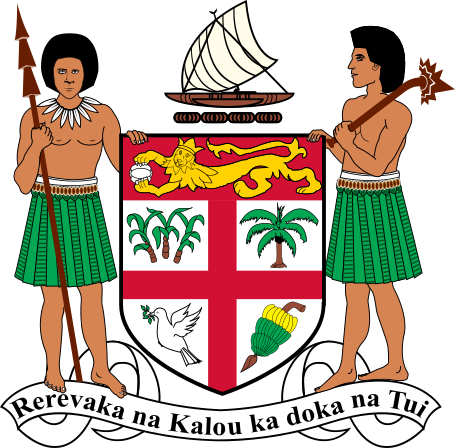
UTC+12:00Coat of Arms
Fiji Flag
What is the Flag of Fiji?
The flag of Fiji is a blue ensign defaced with the national coat of arms of Fiji. The flag was adopted on October 10th, 1970 and is based on the British Blue Ensign, which was used when Fiji was a British colony. It has remained unchanged since then, except for minor modifications to the coat of arms in 2008.
What Does the Fiji Flag Look Like?
The Fiji flag is a light blue field with the Union Jack in the top left corner. In the centre of the flag is the shield of the Fiji coat of arms. This consists of a white field with a red cross and four stars. The four stars represent the four main island groups of Fiji - the Vanua Levu, Viti Levu, Lau and Kadavu.
What is the Fiji Flag Called?
The Fiji flag is officially called the "Blue Ensign with the National Arms of Fiji".
What Does the Fiji Flag Represent?
The Fiji flag represents the country's history, culture and national identity. The national coat of arms on the flag is a symbol of the Fijian nation and its people. The Union Jack in the top left corner is a reminder of the country's history as a British colony. The four stars represent the four main island groups of Fiji and the red cross symbolises Christianity. The blue background of the flag is a symbol of the ocean and the Pacific region.
Who Created the Fijian Flag?
The Fiji flag was designed by local artist and architect, Thomas J.S. George, and adopted by the newly independent government of Fiji on 10 October 1970.
The design of the Fiji flag is a combination of the blue canton of the British ensign, the red-white-red cross of the United Tribes of New Zealand, and the shield of the arms of the Colony of Fiji. The blue canton is a reminder of Fiji's colonial past, while the red-white-red cross of the United Tribes of New Zealand is a symbol of the friendship between the two countries. The shield in the centre of the flag is a representation of the nation's coat of arms, granted by Queen Elizabeth II in 1954, featuring a white dove of peace holding a coconut in its beak. The dove is flanked by a golden lion on one side and a sugar cane stalk on the other. The lion is a symbol of British power and sovereignty, while the sugar cane is a reminder of Fiji's agricultural industry.
The flag also features a white St. George's Cross in the upper left corner, with the words "Fiji" written in gold underneath. This is a reminder of the nation's Christian heritage, and is a reference to the patron saint of Fiji, St. George.
The colours of the flag are also symbolic. The blue canton represents the Pacific Ocean, while the red-white-red cross of the United Tribes of New Zealand symbolises the friendship between the two countries. The golden lion is a symbol of British power and sovereignty, while the white dove of peace holding a coconut in its beak is a reminder of the nation's commitment to peace and harmony. The white St. George's Cross in the upper left corner represents the nation's Christian heritage, and the words "Fiji" written in gold underneath symbolise the country's pride and independence.
Thomas J.S. George was the architect and designer of the Fiji flag. He was born in Fiji in 1937 and studied architecture at the University of Tokyo. He designed many important buildings in Fiji, including the Fiji Museum and the National Library. He was also the founding president of the Fiji Institute of Architects and the Fiji Arts Council.
The design of the Fiji flag has remained unchanged since its adoption in 1970 and has become a symbol of the nation's pride, independence, and commitment to peace and harmony.
The Colours of Fiji
Similar Flags
Flags that share colours with Fiji