Nigeria 🇳🇬
Federal Republic of Nigeria

The flag of Nigeria is composed of three equal vertical bands of green, white and green.
Location
Quick Facts
Alpha 2
NGAlpha 3
NGANumber
566TLD
.ngCapital
AbujaPopulation
206,139,587Area
923,768 km²Languages
Currencies
Drives on
RightWeek starts
MondayTimezones
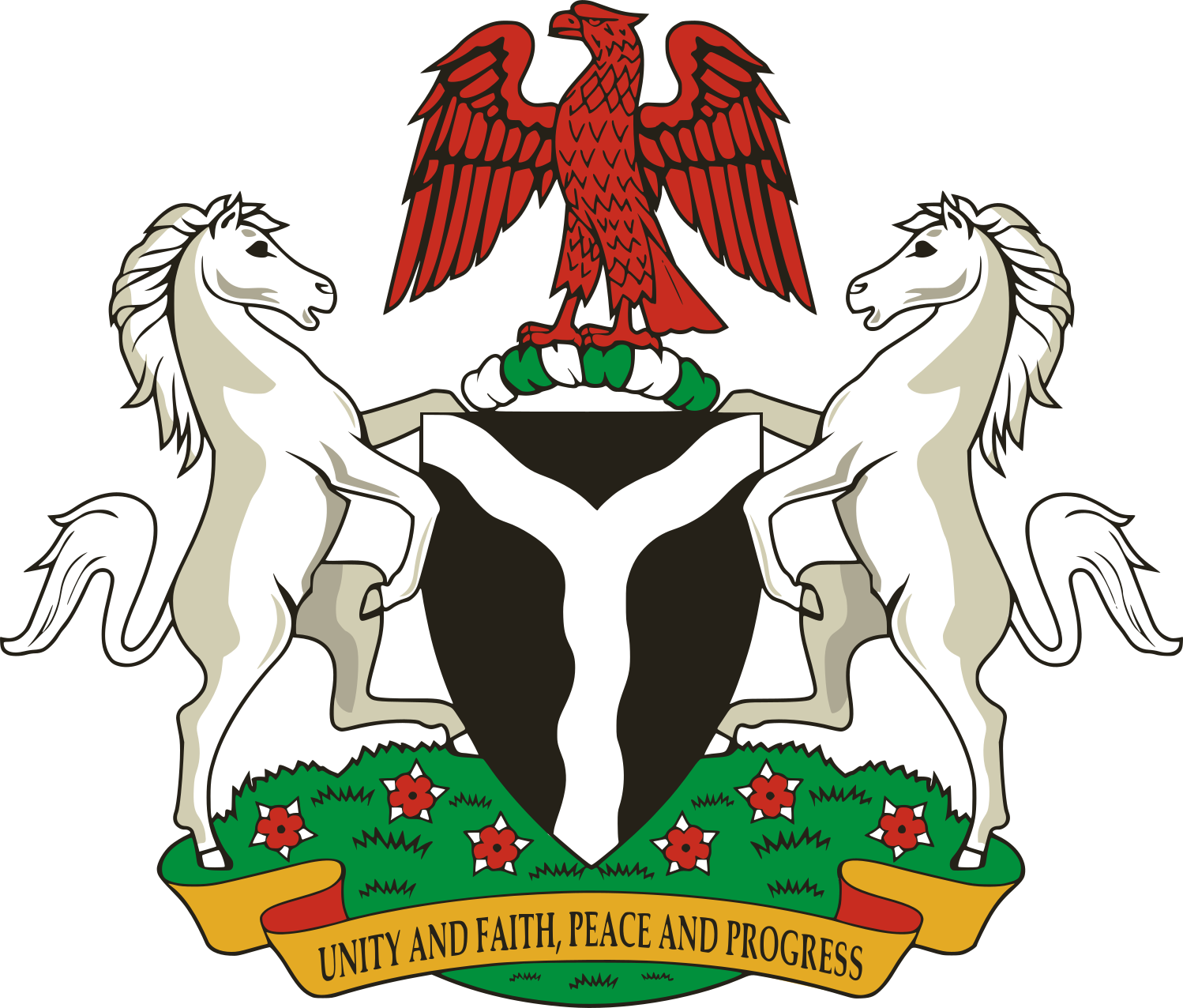
UTC+01:00Coat of Arms
What is the Flag of Nigeria?
The flag of Nigeria is a horizontal tricolour flag with three equal vertical stripes in green, white, and green. The white stripe is in the center and is twice as wide as the two green stripes. The flag is sometimes referred to as the "Green-White-Green" or "Rainbow Flag".
What Does the Nigeria Flag Look Like?
The flag of Nigeria has three equal vertical stripes of green, white, and green. The white stripe is in the center, and is twice as wide as the two green stripes. The green stripes are separated by a thin white line. The flag has a ratio of 2:3, with the width being two-thirds of the length. In the center of the white stripe, there is a black and white shield with the Nigerian coat of arms in the center.
What is the Nigeria Flag Called?
The flag of Nigeria is commonly referred to as the "Green-White-Green" or "Rainbow Flag". This is due to the three main colors of the flag.
What Does the Nigeria Flag Represent?
The flag of Nigeria is a national symbol and is used to represent the country. The colors of the flag are significant and have various meanings. The green represents the natural wealth and beauty of the country, the white symbolizes peace and unity, and the black shield in the center is a representation of the strength of the country. The coat of arms in the center of the flag symbolizes the authority of the federal government of Nigeria.
Who Created the Nigerian Flag?
The Nigeria flag is the symbol of national pride in the country of Nigeria, and its history is a long and interesting one. The design of the flag was created by Nigerian student, Michael Taiwo Akinkunmi, in 1959 in order to provide a symbol of unity for the then-divided country. Akinkunmi was a student at the Government College in Ibadan at the time, and was inspired by the flags of other countries which he had seen during his travels around the world. He wanted to create something that would represent the diversity of the Nigerian people.
The flag is made up of three vertical stripes, each of which has a different color. The green stripe stands for the rich vegetation of the country, the white stripe stands for peace and unity, and the black stripe stands for the strength and resilience of the Nigerian people. The two vertical stripes are separated by two diagonal stripes of a lighter shade of green. This design is thought to represent the country’s two major ethnic groups, the Igbo and the Yoruba.
In the center of the flag is a white circle, which contains a red, black, and green symbol. This symbol is the Nigerian coat of arms, which is composed of an eagle, a shield, and a staff. The eagle stands for strength, the shield stands for protection, and the staff stands for authority. At the top of the staff there is a white ribbon with the words “Unity and Faith, Peace and Progress” written on it in green lettering.
Akinkunmi’s design of the Nigerian flag was officially adopted by the Nigerian government on October 1st, 1960. Since that time, the flag has become a symbol of Nigerian pride and nationalism, and is flown proudly by citizens all over the country. The flag is also seen at international events, such as the Olympic Games, as a reminder of the pride and strength of the Nigerian people.


Similar Flags
Flags that share colours with Nigeria