Cuba 🇨🇺
Republic of Cuba

The flag of Cuba is composed of five equal horizontal bands of blue alternating with white and a red equilateral triangle superimposed on the hoist side of the field. The triangle has its base on the hoist end, spans about two-fifth the width of the field and bears a white five-pointed star at its center.
Location
Quick Facts
Alpha 2
CUAlpha 3
CUBNumber
192TLD
.cuCapital
HavanaPopulation
11,326,616Area
109,884 km²Languages
Currencies
Drives on
RightWeek starts
MondayTimezones
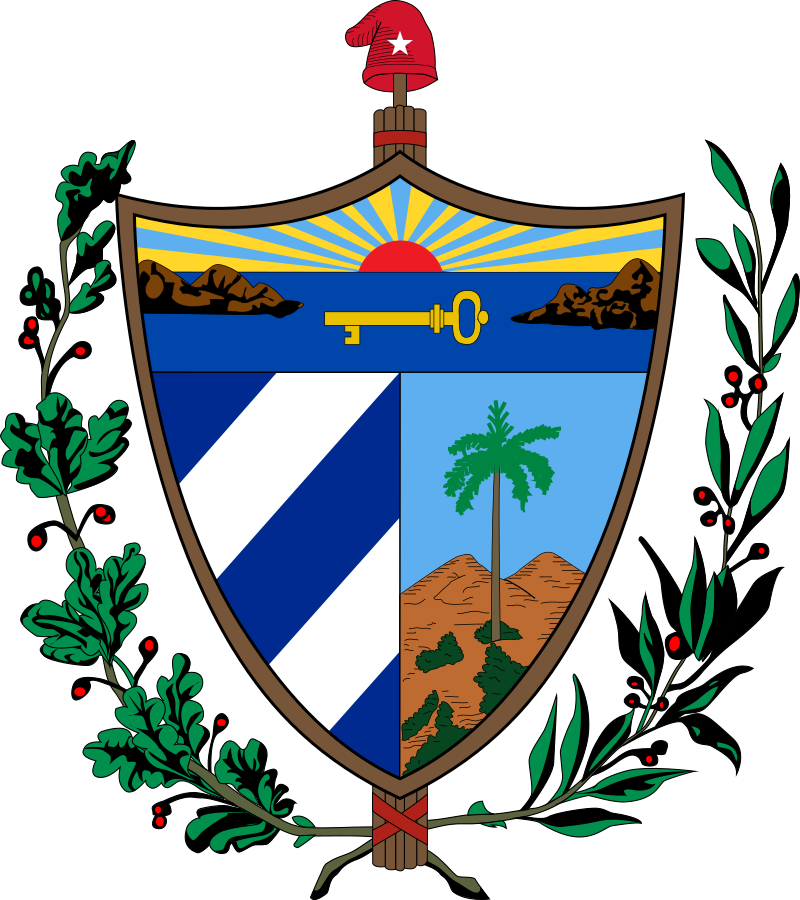
UTC-05:00Coat of Arms
What is the Flag of Cuba?
The flag of Cuba is one of the most recognizable national flags in the world. It is a tricolor flag that consists of three horizontal stripes - blue, white and red. The Cuban national flag is a symbol of the Cuban nation and its people, and it is an important symbol of Cuban identity.
What Does the Cuba Flag Look Like?
The Cuban flag is a horizontal tricolor which consists of three equal horizontal stripes of blue, white, and red. The blue stripe is located at the top and is followed by a white stripe in the middle and a red stripe at the bottom. The Cuban national flag also features a white star in the center of the blue stripe.
What is the Cuba Flag Called?
The Cuban flag is commonly referred to as “La Estrella Solitaria”, which translates to “the solitary star”. This name was chosen to symbolize the unity of the Cuban people in the face of adversity.
What Does the Cuba Flag Represent?
The Cuban flag is a symbol of Cuban unity and independence. The blue stripe represents the sky, the white stripe symbolizes peace, and the red stripe represents the blood of those who have died fighting for Cuba’s freedom. The white star in the center of the flag symbolizes the unity of the Cuban people, and is often seen as a symbol of hope. The Cuban flag is a powerful symbol of Cuban pride and identity.
Who Created the Cuban Flag?
The current flag of Cuba was designed and created by a group of students and intellectuals known as the “Generation of the Centenary”. This group was made up of young Cubans who were born around the centenary of Cuba's independence from Spain in 1902. They were inspired by the Cuban independence movement and wanted to create a symbol of national identity and pride for their beloved country.
The design for the Cuban flag originated from a student’s idea to combine the colors of the Cuban independence movement and the Cuban republic. The red triangle represents the blood that was spilled in the struggle for Cuban independence, while the white star in the center symbolizes the three ideals of the Cuban nation: independence, freedom, and democracy. The blue and white stripes represent the original Cuban flag and reflect the country’s geographical location as an island in the Caribbean Sea.
The original design of the Cuban flag was presented to President Gerardo Machado in 1928 and was officially adopted in May of the same year. The flag was further refined in 1906, when the blue and white stripes were changed to two blue stripes and one white stripe. This design has remained unchanged since then and is the current Cuban flag today.
The Cuban flag is a powerful symbol of Cuban patriotism and national identity, and it is seen as a representation of the Cuban people’s struggle for freedom and independence. It is a reminder of the bravery and resilience of the Cuban people, and a symbol of hope for a brighter future. The Cuban flag is a source of pride for the Cuban people, and a reminder of the country’s long and complex history.
Similar Flags
Flags that share colours with Cuba