Peru 🇵🇪
Republic of Peru
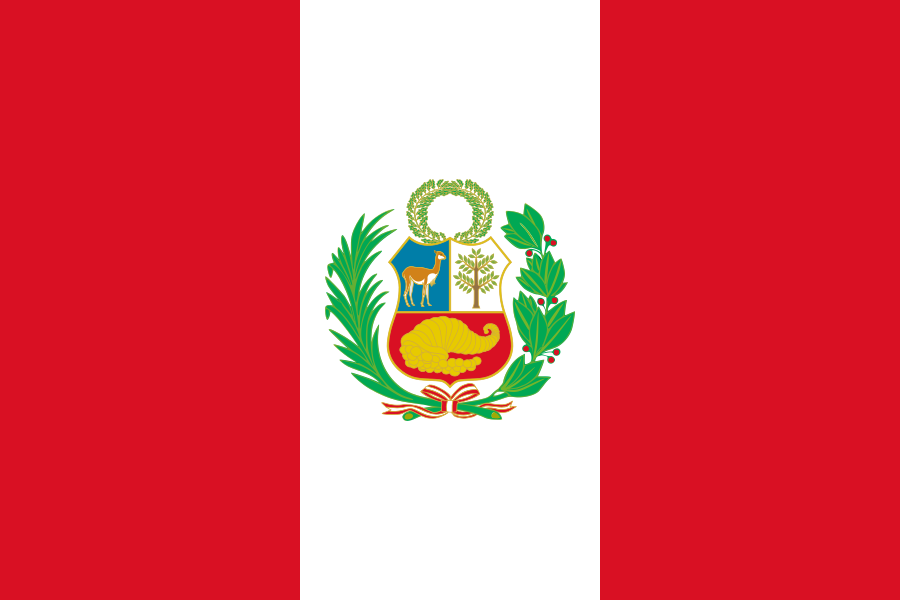
The flag of Peru is composed of three equal vertical bands of red, white and red, with the national emblem centered in the white band.
Location
Quick Facts
Alpha 2
PEAlpha 3
PERNumber
604TLD
.peCapital
LimaPopulation
32,971,846Area
1,285,216 km²Languages
Currencies
Drives on
RightWeek starts
MondayTimezones
UTC-05:00Coat of Arms
What is the Flag of Peru?
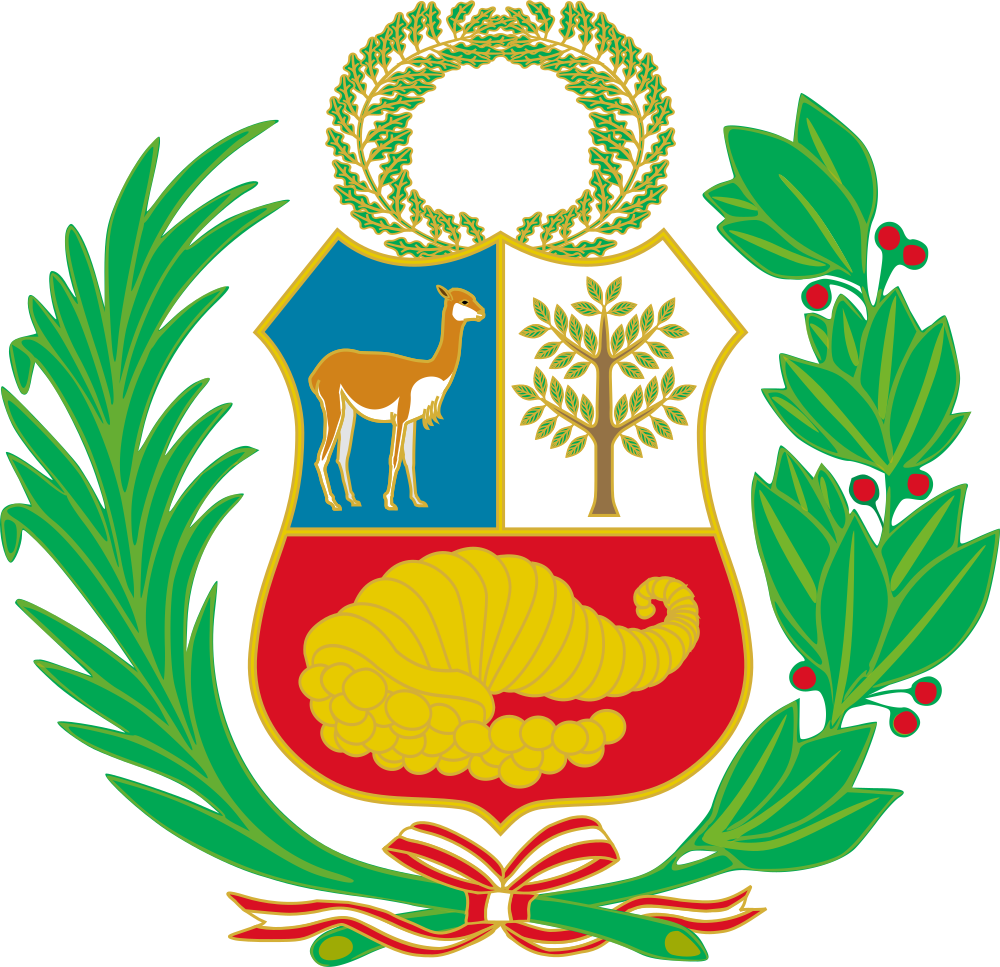
The national flag of Peru is a triband of red, white, and red, with the coat of arms in the center of the white band. The red bands symbolize the blood shed by Peruvians in the struggle for independence. The white band symbolizes peace. The coat of arms features a vicuña (a wild animal found in the Andes Mountains), a cinchona tree (the source of quinine), and a cornucopia, which represents the mineral and agricultural wealth of Peru.
What Does the Peru Flag Look Like?
The Peru Flag is a triband of red, white, and red, with the coat of arms in the center of the white band. The red bands symbolize the blood shed by Peruvians in the struggle for independence. The white band symbolizes peace. The coat of arms features a vicuña, a cinchona tree, and a cornucopia. The colors of the flag, red, white, and green, are the same colors found on the national coat of arms.
What is the Peru Flag Called?
The national flag of Peru is officially known as the “Bandera del Perú” or “Flag of Peru.” It is also known as the “Tricolor” because of its three colors.
What Does the Peru Flag Represent?
The Peru Flag represents the independence, freedom, and unity of Peru. The red bands symbolize the blood shed by Peruvians in the struggle for independence. The white band symbolizes peace. The coat of arms on the flag features a vicuña, a cinchona tree, and a cornucopia. These symbols represent the mineral and agricultural wealth of Peru.
Who Created the Peruvian Flag?
The Peru flag is one of the most iconic symbols in South America and is instantly recognizable around the world. It has been around since 1825 and is considered to be the oldest continuously used flag in South America. The flag was designed by General José de San Martín, a leader in the fight for Peru’s independence from Spain.
General José de San Martín was born in 1778 in Argentina and was educated in Spain. He later joined the Spanish army, where he rose to the rank of general. While in the army, San Martín became passionate about the cause of Latin American independence and left Spain in 1812 to join the revolutionary movement in South America.
In 1820, San Martín led his troops in the Battle of Maipu, which resulted in the liberation of Chile from Spanish rule. He then moved on to Peru, where he helped to lead the fight for independence. He was appointed Protector of Peru in 1821 and began working on a new flag for the newly independent nation.
San Martín chose a tricolor design for the Peruvian flag, a design that is still used today. The flag consists of three vertical stripes. The left stripe is red, the middle stripe is white and the right stripe is red. The white stripe is twice the width of the red stripes.
The meaning behind the colors of the Peru flag is as follows: Red symbolizes the blood shed in the fight for independence, white symbolizes peace and the red stripes represent the union of the two South American countries that fought together for independence, Chile and Peru.
The Peru flag has been a symbol of national pride for over two centuries and is still used today. It stands as a representation of the courage and resilience of the Peruvian people and a tribute to General José de San Martín, who played an important role in the fight for Peru’s freedom.


Similar Flags
Flags that share colours with Peru