Denmark 🇩🇰
Kingdom of Denmark
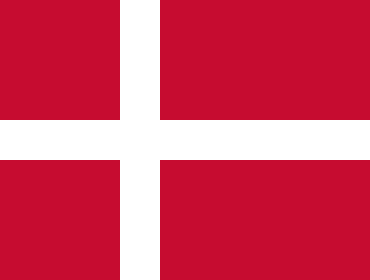
The flag of Denmark has a red field with a large white cross that extend to the edges of the field. The vertical part of this cross is offset towards the hoist side.
Location
Quick Facts
Alpha 2
DKAlpha 3
DNKNumber
208TLD
.dkCapital
CopenhagenPopulation
5,831,404Area
43,094 km²Languages
Currencies
Drives on
RightWeek starts
MondayTimezones
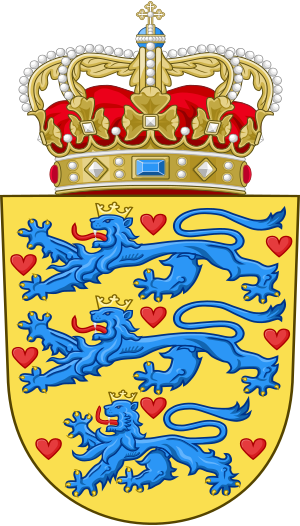
UTC-04:00, UTC-03:00, UTC-01:00 +2 moreCoat of Arms
What is the Flag of Denmark?
The flag of Denmark is the banner of the Danish nation, historically representing the realm of Denmark and the unity of the Danish people. Since the mid-19th century, the flag has been used as the national flag of the Kingdom of Denmark.
What Does the Denmark Flag Look Like?
The flag of Denmark is a white Scandinavian cross on a red background. It is known as the Dannebrog (Danish Cloth), and is the oldest existing national flag in the world. The cross has a width of one-fifth of the flag’s length and it extends to the edges of the flag. The vertical part of the cross is shifted to the hoist side.
What is the Denmark Flag Called?
The flag of Denmark is officially referred to as the Dannebrog, which literally translates to “Danish cloth”. The Dannebrog has been used as a national flag since the mid-19th century, and is the oldest existing national flag in the world.
What Does the Denmark Flag Represent?
The national flag of Denmark is a symbol of the unity of the Danish people, and also stands for the country’s freedom and independence. It is a representation of the Danish nation, and is used for official occasions and ceremonies. The colors of the flag – red and white – are symbols of Denmark’s history and culture. The white cross represents Christianity, while the red background speaks to the nation’s courage and strength.
Who Created the Danish Flag?
The Denmark flag, with its red background and white cross, is one of the most recognizable flags in the world. The flag has been around since the 13th century, and it has gone through several different iterations over the years. The design of the flag is attributed to a Danish nobleman named Olav Tryggvason.
Olav Tryggvason was a Viking who served as the King of Norway from 995 to 1000 AD. He was a powerful ruler, and was known for his successful raids and conquests. Olav was a Christian, and in 995 he was baptized in Rouen, France. It is believed that he was inspired to design the flag of Denmark upon his return to Norway, to signify his newfound faith.
Olav's design for the Denmark flag was a white cross on a red background. The white cross symbolized the Christian faith, while the red background represented the blood of Christ. Olav wanted the flag to be an emblem of his Christian values, and his faith in God.
The flag has changed very little since Olav's design in the 13th century. The only significant change to the flag has been to the relative size and position of the white cross. The cross is now slightly larger, and is centered on the flag.
The Denmark flag has been an important symbol for the country for centuries. It is flown proudly at public events, and is featured on the coat of arms of the country. It has become a symbol of national pride, and is used to represent the country on the international stage.
The design of the Denmark flag is a testament to Olav Tryggvason's vision, and his faith. He wanted a flag that would represent his Christian values, and the flag has done just that for centuries. The flag is a lasting reminder of his legacy, and the faith that he brought to Norway.
Bordering Countries

Similar Flags
Flags that share colours with Denmark