Guinea-Bissau 🇬🇼
Republic of Guinea-Bissau

The flag of Guinea-Bissau features a red vertical band on its hoist side that takes up about two-fifth the width of the field, and two equal horizontal bands of yellow and green adjoining the vertical band. A five-pointed black star is centered in the vertical band.
Location
Quick Facts
Alpha 2
GWAlpha 3
GNBNumber
624TLD
.gwCapital
BissauPopulation
1,967,998Area
36,125 km²Languages
Currencies
Drives on
RightWeek starts
MondayTimezones
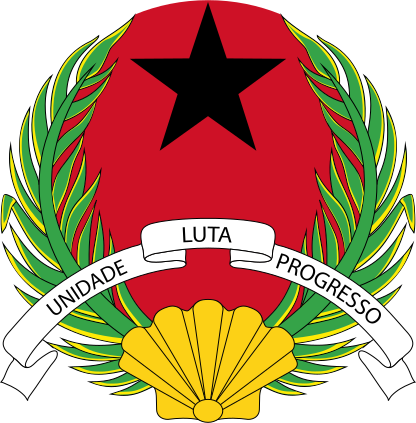
UTCCoat of Arms
What is the Flag of Guinea-Bissau?
The flag of Guinea-Bissau is a horizontal tricolor of yellow, green, and red. The current flag was adopted in 1973, shortly after the country gained independence from Portugal.
What Does the Guinea-Bissau Flag Look Like?
The Guinea-Bissau flag consists of three equal horizontal stripes of yellow, green, and red. The yellow stripe is on the top, the green is in the middle, and the red is on the bottom. The flag also features a black star in the middle of the green stripe.
What is the Guinea-Bissau Flag Called?
The Guinea-Bissau flag is commonly referred to as the Bandeira de Bissau, which translates to “Flag of Bissau” in Portuguese.
What Does the Guinea-Bissau Flag Represent?
The yellow stripe on the Guinea-Bissau flag symbolizes the sun, while the green stripe represents the country’s lush vegetation and hope for a bright future. The red stripe is a tribute to the country’s struggle for independence and the blood spilled during the fight for freedom. The black star in the middle of the green stripe stands for African emancipation and the unity of African nations.
The flag of Guinea-Bissau is a powerful symbol of the country’s struggle for independence and its ongoing efforts to create a bright future for its citizens. It is a reminder of the country’s rich history and culture, and a testament to its resilience and strength.
Who Created the Bissau-Guinean Flag?
The Guinea-Bissau flag was designed by the African Party for the Independence of Guinea and Cape Verde (PAIGC). The PAIGC was a Marxist-Leninist political party that was founded in 1956 by Amílcar Cabral, a revolutionary leader, and his brother Luís Cabral and a group of other Guinean and Cape Verdean citizens. The PAIGC became the ruling party of Guinea-Bissau in 1973, after the country gained independence from Portugal.
The design of the Guinea-Bissau flag is based on the two colors of the Pan-African flag, red and green. The red represents the blood that was shed by African freedom fighters during the struggle for independence from colonial rule. The green symbolizes the country’s hope for a prosperous future. The yellow star in the middle of the flag is a symbol of African unity, representing the union of the peoples of the continent.
The original version of the flag was created in 1973, shortly after the country’s independence. It was designed by the Portuguese painter, João Lopes. The design was later modified in 1991, when the yellow star was added to the design.
The flag of Guinea-Bissau is seen as a symbol of African pride and unity. It is also a reminder of the struggles and sacrifices that were made by African freedom fighters in the fight for independence. The flag has become a symbol of hope and a reminder of the importance of standing together, despite cultural, religious, and political differences.
The flag of Guinea-Bissau serves as a reminder of the history and culture of the country, and of the importance of standing together in unity. It is a symbol of freedom, of hope, and of progress. It is a reminder that the struggle for independence is never truly over and that the fight for justice and equality must continue.

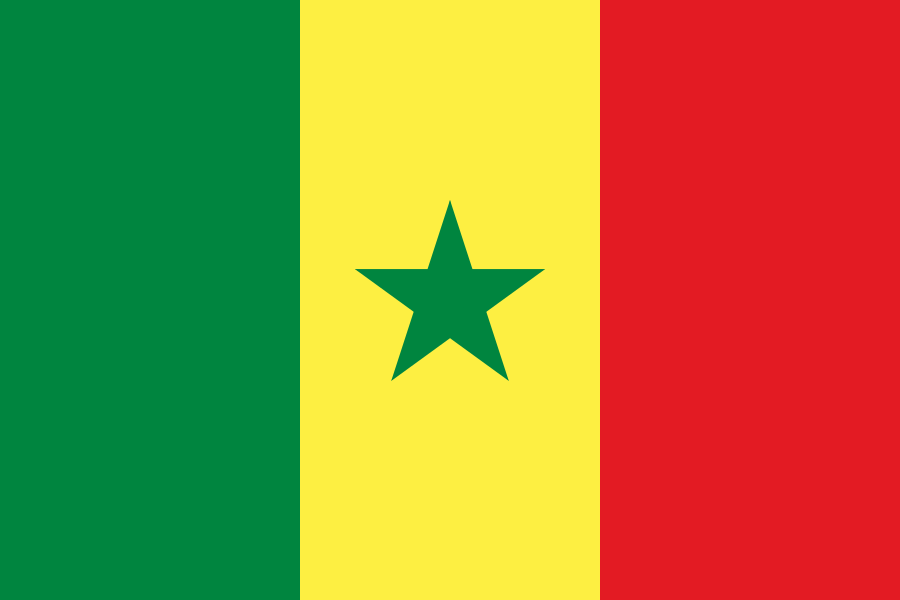
Similar Flags
Flags that share colours with Guinea-Bissau