Palau 🇵🇼
Republic of Palau

The flag of Palau has a light blue field with a large golden-yellow circle that is offset slightly towards the hoist side of center.
Location
Quick Facts
Alpha 2
PWAlpha 3
PLWNumber
585TLD
.pwCapital
NgerulmudPopulation
18,092Area
459 km²Languages
Currencies
Drives on
RightWeek starts
MondayTimezones
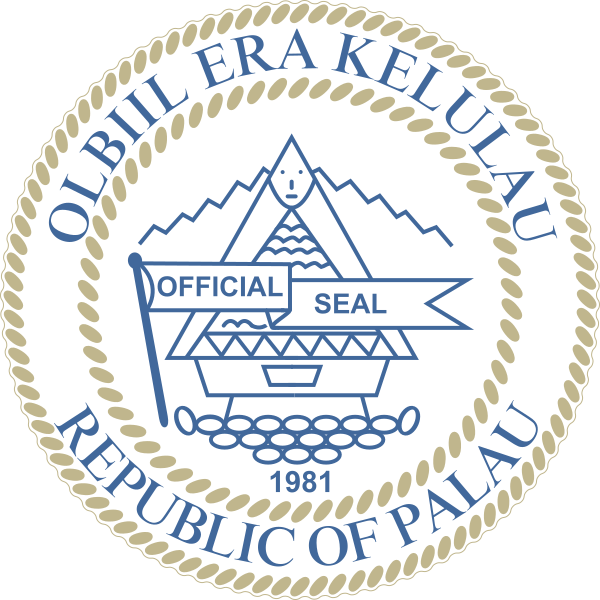
UTC+09:00Coat of Arms
What is the Flag of Palau?
The flag of Palau is the national flag of the island country located in the western Pacific Ocean. Palau, officially the Republic of Palau, is an island country located in the western Pacific Ocean. It consists of more than 500 islands and is the westernmost country in the Micronesia region. The flag of Palau was adopted on January 1, 1981, and it is composed of a blue background with a golden-yellow circle in the center.
What Does the Palau Flag Look Like?
The flag of Palau is composed of a blue background with a golden-yellow circle in the center. The blue color of the flag symbolizes the Pacific Ocean, which surrounds the country, while the golden-yellow circle is a representation of the moon, which is said to be an important part of the Palauan culture and mythology. The flag also features two golden-yellow stars in the circle, which represent the two major islands of the country.
What is the Palau Flag Called?
The Palau flag is officially known as the Belau Rekid, which means "the Palau Flag" in Palauan, the official language of the country. The design of the flag was inspired by the local legend of the "star woman", who is said to have descended from the heavens and brought peace and prosperity to the islands.
What Does the Palau Flag Represent?
The flag of Palau is a symbol of the country’s independence, pride, unity, and identity. The blue color of the flag is a symbol of the Pacific Ocean that surrounds the country, while the golden-yellow circle and stars represent the two major islands of the country and the local legend of the "star woman". The flag also serves as a reminder of the nation’s commitment to peace, justice, and environmental conservation.
Who Created the Palauan Flag?
The Palau flag was designed by a Japanese student named Kazuyuki Sakamoto in 1980. He was studying graphic design at the Tokyo University of Arts at the time and was asked by the Palau government to submit a design for their flag. Sakamoto was inspired by the beauty of Palau's natural environment and wanted to capture it in the design of the flag.
The Palau flag is composed of a blue background with a golden yellow circle in the center. Inside the circle is a traditional Palauan canoe and a single star. The star is meant to represent the unity and independence of the Palauan people. The canoe is a symbol of the Palauan seafaring tradition and the blue background represents the Pacific Ocean.
The colors used in the Palau flag are also symbolic. The blue background is meant to represent the ocean while the yellow circle signifies the sun and the energy it provides to the Palauan people. The green canoe is a reminder of the Palauan people's connection to the sea and their reliance on it for sustenance and transportation. The white star is a symbol of peace and unity for the Palauan people.
The Palau flag was officially adopted in 1981 and has been an iconic symbol of the country ever since. It has been used in government buildings, on national holidays, and at sporting events. It is also displayed at international gatherings, such as the Pacific Islands Forum, to represent the nation of Palau.
Kazuyuki Sakamoto's design for the Palau flag perfectly captures the beauty and spirit of the Palauan people. It is a reminder of the nation's connection to the sea, its reliance on the sun for energy, and its commitment to peace and unity. The Palau flag is a source of pride for the people of Palau and a reminder of their unique culture and history.
The Colours of Palau
Similar Flags
Flags that share colours with Palau