Samoa 🇼🇸
Independent State of Samoa

The flag of Samoa has a red field. A blue rectangle, bearing a representation of the Southern Cross made up of five large and one smaller five-pointed white stars, is superimposed in the canton.
Location
Quick Facts
Alpha 2
WSAlpha 3
WSMNumber
882TLD
.wsCapital
ApiaPopulation
198,410Area
2,842 km²Languages
Currencies
Drives on
LeftWeek starts
MondayTimezones
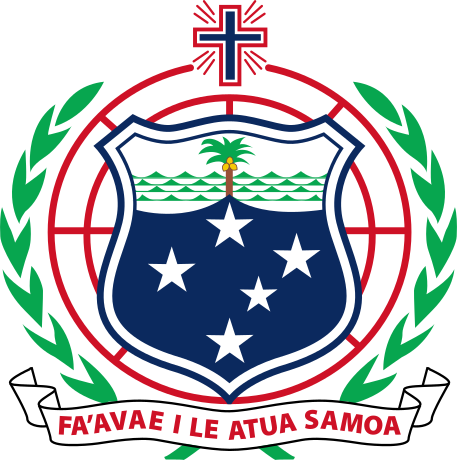
UTC+13:00Coat of Arms
What is the Flag of Samoa?
The flag of Samoa is the national flag of Samoa, a small island country located in the South Pacific Ocean. The flag was officially adopted on April 2, 1949, and has been used ever since. It is a blue ensign with a white Southern Cross on it, and four red stars.
What Does the Samoa Flag Look Like?
The Samoa flag is a blue ensign, which is a type of flag with a white field that covers the top half of the flag. On this white field, the flag features a white Southern Cross constellation with four red stars. The Southern Cross is an asterism (a star pattern) that is visible in the night sky in the Southern Hemisphere. The four red stars represent the four cornerstones of the Samoan culture: faith, family, love, and knowledge.
What is the Samoa Flag Called?
The official name of the flag of Samoa is the Tu'i Malolo. The Tu'i Malolo is a symbol of nationhood and sovereignty, and is also Samoan for "the King's Flag".
What Does the Samoa Flag Represent?
The flag of Samoa represents independence and sovereignty. The blue background symbolizes the ocean and the sea, which is an integral part of the Samoan culture. The white Southern Cross constellation symbolizes the guidance and protection of God, while the four red stars represent the four cornerstones of the Samoan culture: faith, family, love, and knowledge. Together, the symbols on the flag represent the courage, strength, and unity of the Samoan people.
Who Created the Samoan Flag?
The current flag of Samoa was designed by the country’s first Prime Minister, Malietoa Tanumafili II, and adopted in 1962, following independence from New Zealand in the same year. The flag is composed of a red field with a white rectangle at the canton charged with a blue, five-pointed star.
The red color of the flag is said to represent the courage of the Samoan people, while the white rectangle at the canton is said to represent purity. The blue star is a symbol of the guiding light of God and is said to represent the unity of the Samoan people. The star has five points, which represent the five Samoan islands: Savai’i, Upolu, Tutuila, Manono and Apolima.
The design of the flag was inspired by the traditional Samoan tatau, or tattoo. The tatau is a traditional body art practiced by the Samoan people and is used to represent their identity and culture. The use of the traditional tatau in the flag is a reminder of the importance of preserving Samoan culture and traditions.
The flag of Samoa is also known as the “Flag of Freedom”, as it was adopted after the country gained its independence from New Zealand in 1962. Before independence, the country flew a blue ensign with the Union Jack in the canton.
Malietoa Tanumafili II was born in 1895 and became the first native Samoan to obtain a university degree. After graduating from the University of Hawaii in 1921, he returned to Samoa and became active in politics, eventually becoming the Prime Minister of Samoa in 1962. He was a strong advocate for the independence of Samoa and was instrumental in the design of the flag.
In addition to designing the flag of Samoa, Malietoa Tanumafili II was also responsible for the introduction of universal suffrage in 1965, which granted all citizens of Samoa the right to vote. He also founded the Samoa National Council, the first political party in the country.
Malietoa Tanumafili II passed away in 2007, leaving behind a legacy of courage, strength and unity through the design of the flag of Samoa. The flag has become a symbol of the independence of the Samoan people and a reminder of the importance of preserving traditional Samoan culture and traditions.
The Colours of Samoa
Similar Flags
Flags that share colours with Samoa