South Korea 🇰🇷
Republic of Korea

The flag of South Korea has a white field, at the center of which is a red and blue Taegeuk circle surrounded by four black trigrams, one in each corner.
Location
Quick Facts
Alpha 2
KRAlpha 3
KORNumber
410TLD
.krCapital
SeoulPopulation
51,780,579Area
100,210 km²Languages
Currencies
Drives on
RightWeek starts
MondayTimezones
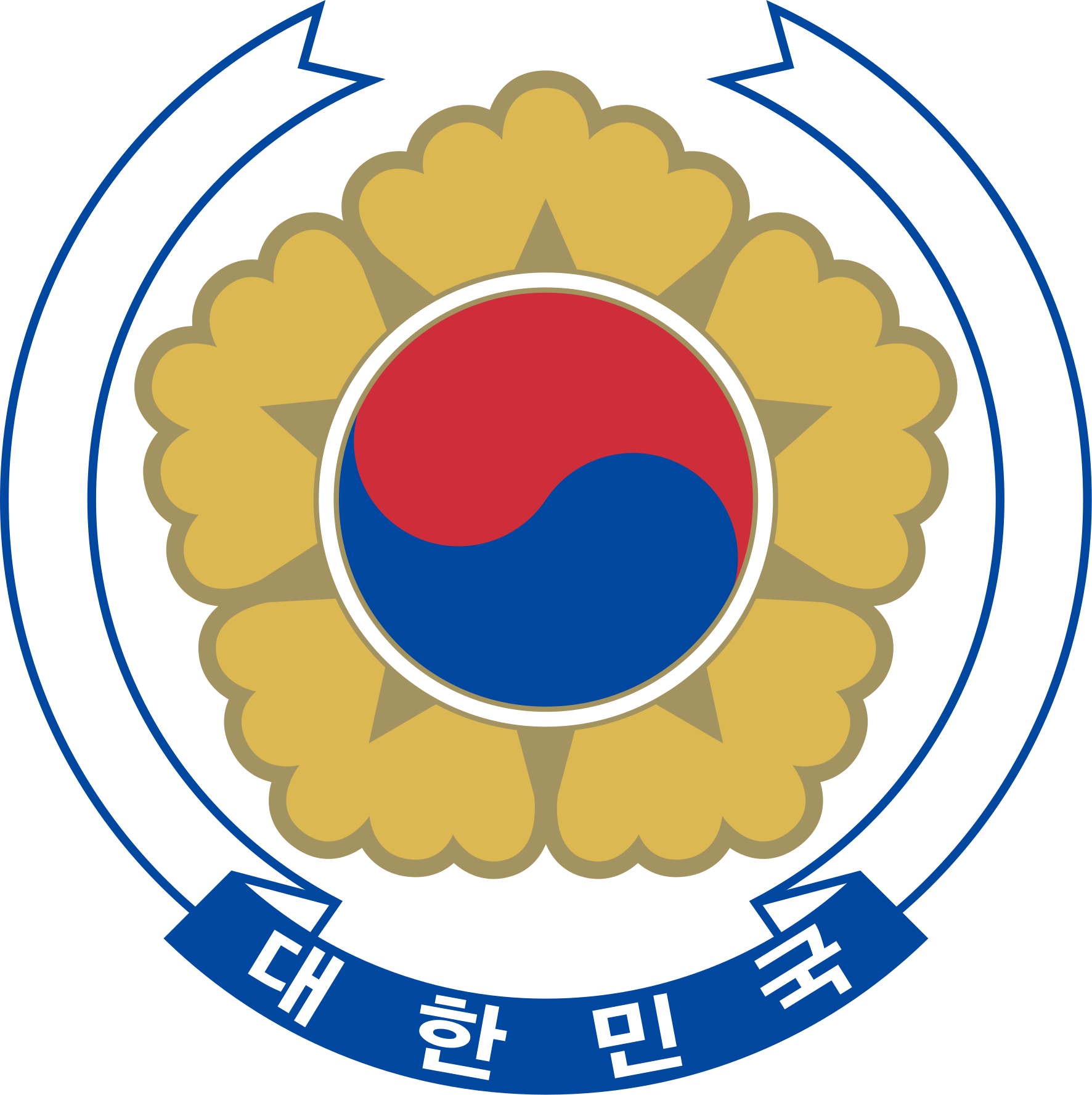
UTC+09:00Coat of Arms
What is the Flag of South Korea?
The flag of South Korea is a very important symbol of national identity and pride. It is a white field with a red and blue yin-yang symbol, known as a taegeuk, in the center. The four black trigrams on each side represent the four cardinal directions and the four elements of nature.
What Does the South Korea Flag Look Like?
The South Korea flag is a white field with a red and blue yin-yang symbol, known as a taegeuk, in the center. The yin-yang symbol is composed of two interlocking shapes, with a circle of eight trigrams, four of which are red and four of which are blue. On the sides of the taegeuk are four black trigrams, which represent the four cardinal directions and the four elements of nature. The colors of the flag, white, blue, and red, are also traditional colors in Korean culture.
What is The South Korea Flag Called?
The South Korea flag is officially called the ‘Taegeukgi’, which translates to ‘the flag of the great yin and yang’. The name is derived from the yin-yang symbol in the middle of the flag, and reflects the importance of balance in Korean philosophy and culture.
What Does the South Korea Flag Represent?
The South Korea flag symbolizes the interdependent nature of the yin and yang, and the importance of balance in Korean life. The flag also represents the Korean people’s struggle for freedom and independence, and the four black trigrams are a reminder of the cardinal directions and the four elements of nature. The flag is a symbol of pride and unity for all Korean people, and its colors are a reminder of the country’s long history.
Who Created the South Korean Flag?
The South Korean flag was designed in 1883 by a Korean artist named Ryu Sung-ryong. The flag has three parts, two of which are a white background and a red and blue circle in the center. The white background symbolizes peace and purity in the country, while the red and blue circle represent the balance of yin and yang, or opposing forces, in the country and the world.
The South Korean flag was adopted in 1948 after the liberation of the country from Japan during World War II. The flag was designed in the same style as the Japanese flag, but with the addition of a central blue circle with a red outline. This circle was designed to represent the Korean people, and the taegeuk, or yin and yang symbol, inside it symbolizes the balance and harmony of the country and its people.
The colors of the South Korean flag are also highly symbolic. Red represents the Korean people’s struggle for independence and freedom, while blue stands for peace and harmony. White is a symbol of purity and innocence, and the yin and yang symbol in the center of the flag represent the balance between the two forces.
The South Korean flag is often seen as a symbol of national pride and patriotism, and it is flown at important events such as national holidays, sporting events, and important ceremonies. The flag is also used in many other ways, from being printed on clothes and souvenirs to being used as a symbol of patriotism and unity on social media.
The South Korean flag is an important part of the country’s culture and identity and is a tangible reminder of the country’s history and its journey to independence and prosperity. The flag is a symbol of the South Korean people’s struggle for freedom and justice, and its colors and symbolism remind the people of the importance of peace and harmony in their country.
The Colours of South Korea
Bordering Countries

Similar Flags
Flags that share colours with South Korea