Botswana 🇧🇼
Republic of Botswana

The flag of Botswana has a light blue field with a white-edged black horizontal band across its center.
Location
Quick Facts
Alpha 2
BWAlpha 3
BWANumber
72TLD
.bwCapital
GaboronePopulation
2,351,625Area
582,000 km²Landlocked
YesLanguages
Currencies
Drives on
LeftWeek starts
MondayTimezones
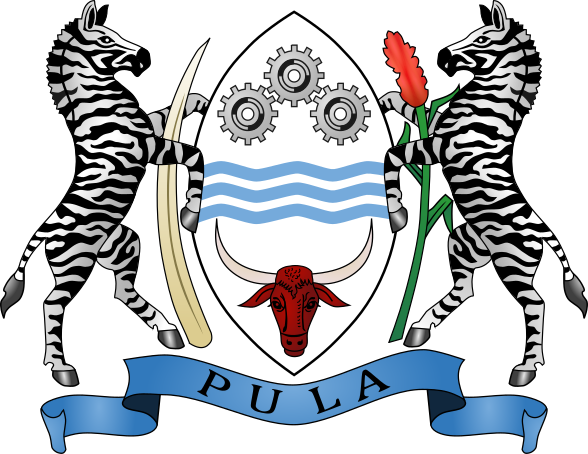
UTC+02:00Coat of Arms
What is the Flag of Botswana?
The Flag of Botswana is a horizontal tricolor of blue, black and white, with a light brown strip of zebra stripes in the center. The flag was adopted on September 30, 1966, shortly after Botswana gained independence from Britain. The flag is also known as the "Tirelo Sechaba," which can be translated to "The Nation's Flag."
What Does the Botswana Flag Look Like?
The flag of Botswana is a horizontal tricolor of blue, black and white. In the center of the flag is a light brown strip containing a pattern of zebra stripes. The blue band of the flag symbolizes water, while the black symbolizes the people of Botswana. The white band symbolizes peace, and the zebra stripes represent the nation's wildlife. The flag measures 3:2, and has a width-to-length ratio of 1:2.
What is the Botswana Flag Called?
The Botswana Flag is officially called the "Tirelo Sechaba," which can be translated to "The Nation's Flag."
What Does the Botswana Flag Represent?
The Botswana Flag is a symbol of the nation's independence, and is a representation of the country's progress and development. The blue band of the flag symbolizes water, which is essential for the country's economy and development. The black band symbolizes the people of Botswana, while the white band represents peace. The zebra stripes in the center of the flag represent the nation's wildlife, which is abundant in Botswana.
Who Created the Botswanan Flag?
The Botswana flag was designed and created by Mr. Maruping Dibete, a Botswana artist and former school teacher. He was inspired to create the flag when he saw the South African flag in 1964. He had a vision of a flag that would symbolize his country’s independence and the unity of all its people.
The flag of Botswana was officially adopted on September 30, 1966, when Botswana became an independent nation. It features three horizontal stripes of light blue, white, and black. The colors are thought to be symbolic of the country’s three major tribes: the Tswana, the Bakalanga, and the San. The blue stripe represents the sky and water, the white stands for peace and harmony, and the black is a reminder of the country’s struggle for independence.
At the center of the flag is a white circle with a black silhouette of a zebra. The zebra is a national symbol of Botswana, and the circle is meant to represent the unity of the country’s people.
Mr. Maruping Dibete was the first to propose the design for the flag, and it was later developed and refined by the Botswana government. The design was officially adopted in 1966, and it has since been used as a symbol of national pride and unity in Botswana.
The flag of Botswana continues to be an important symbol of the country’s national identity and independence. It is a reminder of the hard-fought struggle for freedom and a symbol of the nation’s unity. Mr. Maruping Dibete’s design for the flag will always be remembered as a testament to his passion and dedication to his country.
The Colours of Botswana
Bordering Countries


Similar Flags
Flags that share colours with Botswana