Burkina Faso 🇧🇫
Burkina Faso

The flag of Burkina Faso features two equal horizontal bands of red and green, with a yellow five-pointed star in the center.
Location
Quick Facts
Alpha 2
BFAlpha 3
BFANumber
854TLD
.bfCapital
OuagadougouPopulation
20,903,278Area
272,967 km²Landlocked
YesLanguages
Currencies
Drives on
RightWeek starts
MondayTimezones
UTCCoat of Arms

What is the Flag of Burkina Faso?
The flag of Burkina Faso is a tricolor featuring two equal horizontal bands of red (top) and green with a yellow five-pointed star resting in the center. The flag was adopted on 4 August 1984, following the overthrow of the previous government.
What Does the Burkina Faso Flag Look Like?
The Burkina Faso flag has a red band on the top half, a green band on the bottom half, and a yellow five-point star in the center. The two horizontal bands are equal in size. The star is centered and its points extend to each corner of the flag. The colors of the flag are symbolic of the country’s traditional Pan-African colors of unity and freedom.
What is the Burkina Faso Flag Called?
The flag of Burkina Faso is most commonly referred to as the “Flag of the Republic of Burkina Faso”. It is sometimes referred to as the “Star of Liberty”, in reference to the yellow star in the center of the flag.
What Does the Burkina Faso Flag Represent?
The Burkina Faso flag is symbolic of the country’s commitment to Pan-African unity and freedom. The red band represents the bloodshed of those who have fought for the country’s independence, while the green band represents hope and the nation’s agricultural industry. The yellow star is symbolic of the light of enlightenment and hope for a brighter future. The flag is a reminder of the country’s commitment to unity and freedom.
Who Created the Burkinabe Flag?
The Burkina Faso flag was designed by the late Thomas Sankara, a revolutionary leader and former President of Burkina Faso. Sankara was a member of the Marxist-Leninist group, the National Council of the Revolution (CNR) and was the President of the Republic from 4 August 1983 to 15 October 1987.
The flag of Burkina Faso, which was adopted on August 4, 1984, is composed of two equal horizontal bands of red and green, with a yellow five-pointed star in the center. The green band symbolizes the abundance of the land, the red symbolizes the struggle of the people for freedom, and the yellow star stands for the country’s unity and independence.
The design of the flag was inspired by the Pan-Africanist colors of red, green, and yellow. The colors are meant to represent the continent of Africa and the unity of its people. The yellow star is a symbol of hope and progress, and it was also chosen to represent the star of Burkina Faso’s independence, as it was the first African country to gain independence from colonial rule.
Thomas Sankara was a revolutionary leader and former President of Burkina Faso. He was a strong advocate of Pan-Africanism and was seen as a symbol of revolutionary change. He was well-known for his anti-imperialist and anti-colonial views and policies, and he was also committed to the development of his country.
Sankara was assassinated in 1987, and the Burkina Faso flag was created in his honor. The flag was intended to symbolize the country’s struggle for freedom and independence, and the colors of the flag were also meant to represent the continent of Africa and the unity of its people.
Thomas Sankara was a revolutionary leader and former President of Burkina Faso who was committed to the development of his country. His legacy lives on today through the Burkina Faso flag, which was created to honor his commitment to the people of Burkina Faso and to the continent of Africa.
The Colours of Burkina Faso


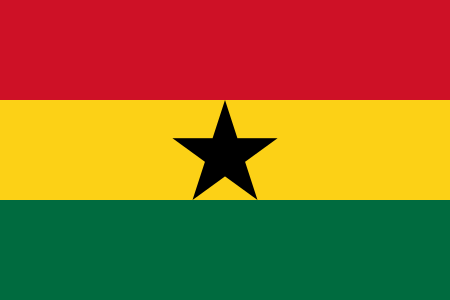
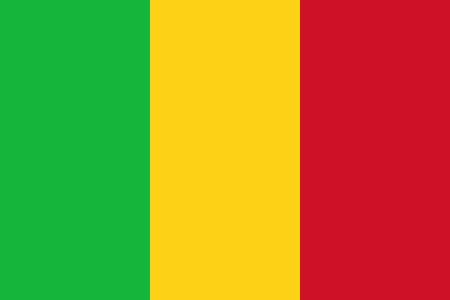


Similar Flags
Flags that share colours with Burkina Faso