Estonia 🇪🇪
Republic of Estonia

The flag of Estonia is composed of three equal horizontal bands of blue, black and white.
Location
Quick Facts
Alpha 2
EEAlpha 3
ESTNumber
233TLD
.eeCapital
TallinnPopulation
1,331,057Area
45,227 km²Languages
Currencies
Drives on
RightWeek starts
MondayTimezones
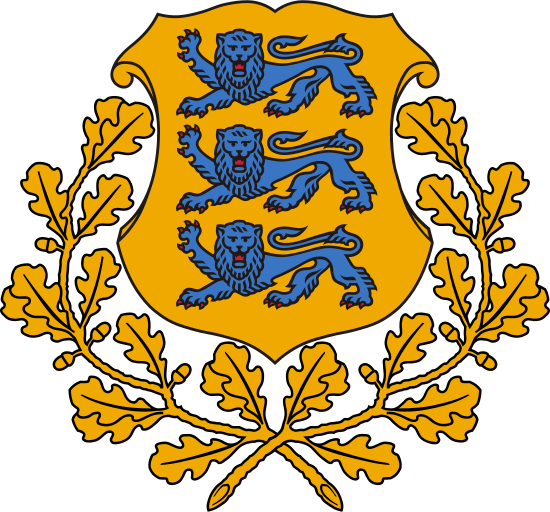
UTC+02:00Coat of Arms
What is the Flag of Estonia?
The flag of Estonia is a tricolor flag consisting of three horizontal stripes of equal size. The top stripe is blue, followed by a black stripe in the middle, and the bottom stripe is white.
What Does the Estonia Flag Look Like?
The flag of Estonia is a tricolor flag consisting of three horizontal stripes of equal size. The top stripe is blue, followed by a black stripe in the middle, and the bottom stripe is white. There is a blue, black, and white shield in the center of the flag, which is also the official coat of arms of Estonia.
What is the Estonia Flag Called?
The Estonia flag is officially known as the “Sini-Must-Valge” flag, which translates to “Blue-Black-White” in English. It is often referred to simply as the “tricolor” or “Estonian tricolor”.
What Does the Estonia Flag Represent?
The blue stripe of the Estonia flag represents loyalty and faithfulness, while the black stripe stands for the country’s dark past. The white stripe symbolizes the hope for a brighter future. The shield in the center of the flag is the official coat of arms of Estonia, which features a blue lion on a red background, with a red and white striped shield held aloft in its paw.
The colors of the flag of Estonia have also come to represent the country’s independence, with the blue, black, and white colors representing the fight for freedom and the country’s struggle for independence from foreign rule.
Who Created the Estonian Flag?
The history of the Estonian flag dates back to the early 20th century, when it was adopted as the official flag of the country in 1918. The design is attributed to a man named Friedrich Reinhold Kreutzwald, who was a renowned Estonian poet and author. He was chosen to design the flag due to his deep knowledge of Estonian culture and his ability to create a visual representation of the country’s pride and spirit.
The design of the Estonian flag is composed of three horizontal stripes of equal width. The upper stripe is blue, the middle stripe is black, and the bottom stripe is white. The flag also features a coat of arms in the upper left corner of the flag. The coat of arms features a white shield with a blue background. In the center of the shield is a golden lion with a sword in it’s right paw. Above the shield is a golden crown.
Kreutzwald was said to have been inspired by the flags of Finland and Sweden, which both feature blue and white stripes. He wanted the Estonian flag to be unique and to represent the country’s values and history. The blue represents the country’s sky, the black stands for the soil, and the white represents the snow and purity. The coat of arms symbolizes the courage of the Estonian people and their readiness to defend their homeland.
The Estonian flag was officially adopted by the Estonian government in 1918, and has been used ever since. It is a symbol of the country’s independence and pride, and is respected by all citizens. The flag is flown on all public buildings, and is also seen at many sporting events and other national celebrations.
In recent years, the Estonian flag has gained worldwide recognition. It is seen as a symbol of freedom and independence, and is seen in many countries around the world. It is a reminder of the courage and spirit of the Estonian people and their determination to remain independent.
The Estonian flag is a symbol of the pride of the Estonian people, and the design is attributed to Friedrich Reinhold Kreutzwald. The design of the flag reflects the country’s values, and is a reminder of the courage and strength of the Estonian people. It is a symbol of freedom and independence, and is seen all around the world.


Similar Flags
Flags that share colours with Estonia