Nepal 🇳🇵
Federal Democratic Republic of Nepal

The flag of Nepal is the world's only non-quadrilateral flag of a sovereign country. It takes the shape of two adjoining right-angled triangles and has a crimson red field with deep blue edges. Within the smaller upper triangle is an emblem of the upper half of a white sun resting on an upward facing white crescent. The lower triangle bears a white sun with twelve rays.
Location
Quick Facts
Alpha 2
NPAlpha 3
NPLNumber
524TLD
.npCapital
KathmanduPopulation
29,136,808Area
147,181 km²Landlocked
YesLanguages
Currencies
Drives on
LeftWeek starts
SundayTimezones
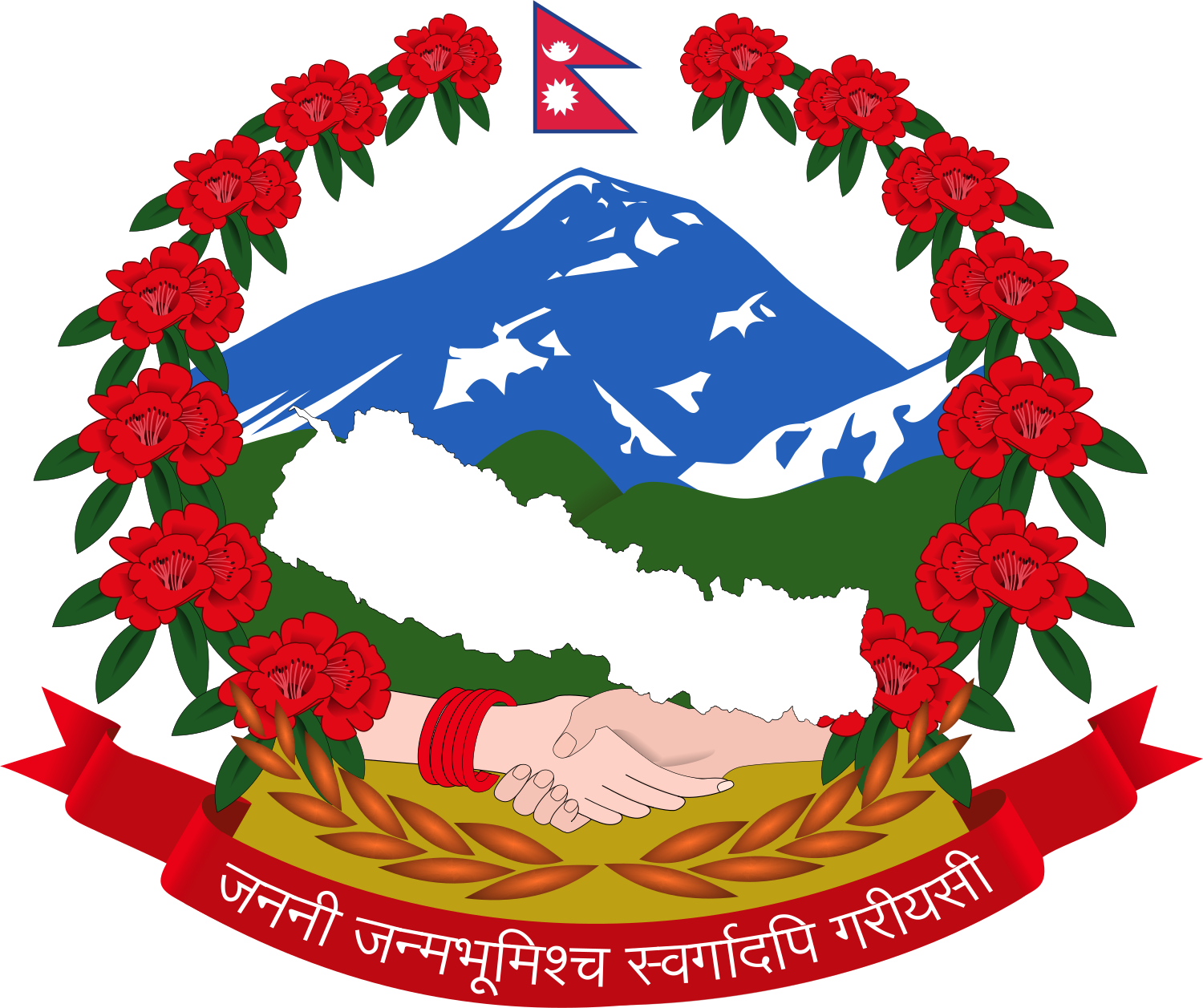
UTC+05:45Coat of Arms
What is the Flag of Nepal?
The flag of Nepal is a popularly recognized symbol of the country and its people. It is a rectangular flag with two red pennants, bordered in blue, and a white sun and moon in the center. The flag is officially known as the "Nepal Flag" or the "Nepalese Flag".
What Does the Nepal Flag Look Like?
The Nepal flag has two red pennants on the top and bottom of the flag, bordered in blue. The two pennants are joined together by a white sun and moon. The sun is said to represent the Rana dynasty, while the moon represents the Shah dynasty. The blue border symbolizes peace and harmony.
What is the Nepal Flag Called?
The Nepal Flag is officially known as the "Nepal Flag" or the "Nepalese Flag". It is often referred to as the "Lonely Flag" due to its unique shape and design.
What Does the Nepal Flag Represent?
The Nepal Flag is a symbol of the country's independence and sovereignty. It represents the country's unity and the strength of its people. It is a symbol of hope and resilience, as well as a symbol of peace and harmony. The flag is also seen as a representation of the country's cultural diversity, as the sun and moon represent the union of two different cultures.
Who Created the Nepali Flag?
The Flag of Nepal is one of the most iconic symbols of the country's identity and history. It is a horizontal tricolor of red, blue, and white with a white emblem in the center. The flag was designed in 1962 and officially adopted in 1963, shortly after the country gained its independence from Britain.
The design of the Nepal Flag was created by a team of students, led by a young law student named Jagat Jyoti Shrestha. Shrestha was commissioned by the Nepalese government to design the flag. His inspiration came from the country's rich cultural heritage. The red color of the flag represents the bravery of the Nepalese people, the blue color stands for peace, and the white is a symbol of the country’s religious diversity. The white emblem in the center of the flag is a combination of the sun and the crescent moon, which has a deep meaning in Nepali culture. It is a symbol of the country's unity and harmony.
Shrestha's design has been used for more than 50 years, and it continues to represent the nation's identity and pride. It has become a symbol of hope and strength for the Nepalese people. The design of the flag has not changed since it was created, and it is still used by the government and citizens of Nepal today.
Shrestha, now retired, still takes great pride in the design of the Nepal Flag. He was honored in 2003 with the National Award of Excellence for his work. His design is a reminder of the country’s strength and courage, and it stands as a symbol of the values of unity and progress. It is a reminder to all Nepalese people of their past and a sign of hope for the future.
The Colours of Nepal

Similar Flags
Flags that share colours with Nepal