Poland 🇵🇱
Republic of Poland

The flag of Poland is composed of two equal horizontal bands of white and red.
Location
Quick Facts
Alpha 2
PLAlpha 3
POLNumber
616TLD
.plCapital
WarsawPopulation
37,950,802Area
312,679 km²Languages
Currencies
Drives on
RightWeek starts
MondayTimezones
UTC+01:00Coat of Arms
What Is the Flag of Poland?
The national flag of Poland is a white and red flag composed of two horizontal stripes of equal size. It is also known as the Polish flag, or simply the White and Red. The flag is one of the oldest flags in the world, having been in existence since the 13th century.
What Does the Poland Flag Look Like?
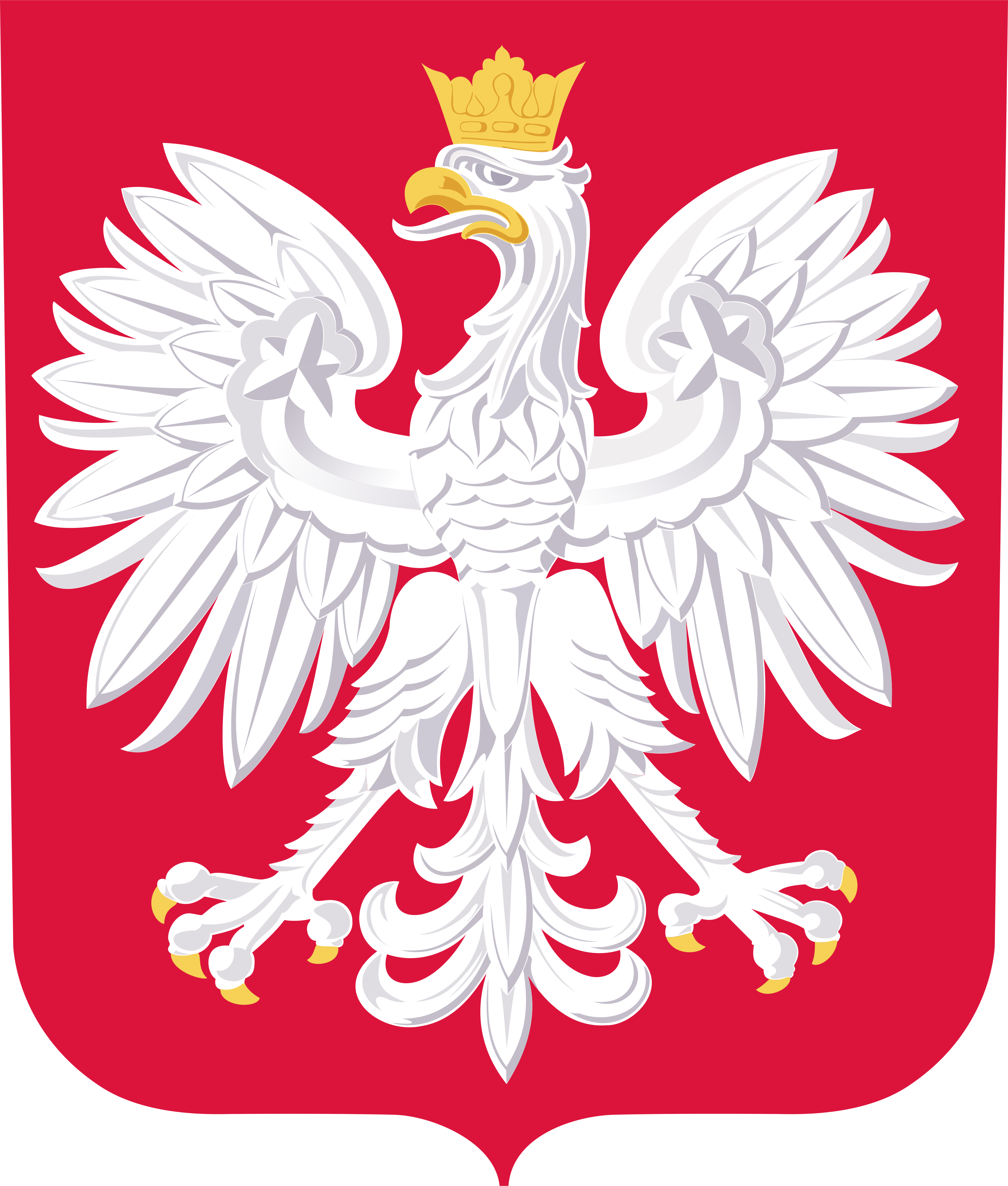
The Poland flag consists of two horizontal stripes of equal size. The top stripe is white and the bottom stripe is red. The width of each stripe is equal to half the height of the flag. In the center of the flag is the national coat of arms of Poland, which consists of a crowned eagle in a shield. The eagle is surrounded by a wreath of white and red.
What Is the Poland Flag Called?
The Poland flag is often referred to as the White and Red. It is also sometimes referred to as the White Eagle Flag, in reference to the eagle in the center of the flag.
What Does the Poland Flag Represent?
The Poland flag is a symbol of the nation's history, identity, and culture. The white represents purity and peace, while the red represents courage and strength. The eagle is a symbol of the nation's sovereignty and independence. The white and red stripes also represent the nation's two main colors, which were used in the national flag since the 13th century.
Who Created the Polish Flag?
The Poland flag is a national symbol of the country and has been in use since the 18th century. It consists of two horizontal stripes of equal width, the upper one white and the lower one red. In the center of the white stripe is a coat of arms which consists of a white eagle with a golden crown, holding a golden cross in its talons. The current flag was officially adopted in 1919.
The design of the Poland flag has its roots in the medieval banners used by kings of Poland, which featured a white eagle with a golden crown on a red field. This was later adopted by the Polish Sejm (Parliament) in 1831, and the design remained largely unchanged until 1919.
The designer of the modern Polish flag is not known for certain. However, some sources credit the design to Jan Henryk Dabrowski, a Polish military commander who fought in the Napoleonic Wars. Dabrowski is said to have designed the flag in 1794, while fighting in Italy against the French. The flag became a symbol of Dabrowski’s “Army of the Republic” and was later adopted by the Polish Sejm.
The exact origin of the white eagle on the Poland flag is also unknown. However, it is believed to be a symbol of the Piast dynasty, a dynasty of Polish rulers that lasted from the 10th to the 13th centuries. The golden crown is believed to be a reference to the monarchy, while the golden cross in the eagle’s talons may symbolize Poland’s strong Christian faith.
The Poland flag has gone through several minor changes since its adoption in 1919. In the 1950s, for instance, the eagle’s claws were made more symmetrical and its head was given a more naturalistic look. Additionally, the crown was made slightly larger and the cross was modified slightly.
Although the designer of the modern Poland flag is not known for certain, the design is a symbol of the country’s long and proud history. The white eagle, golden crown, and red field evoke the country’s medieval heritage, while the golden cross symbolizes its strong Christian faith. The flag is a reminder of the strength and resilience of the Polish people, and is a source of national pride for many.


Similar Flags
Flags that share colours with Poland