Portugal 🇵🇹
Portuguese Republic
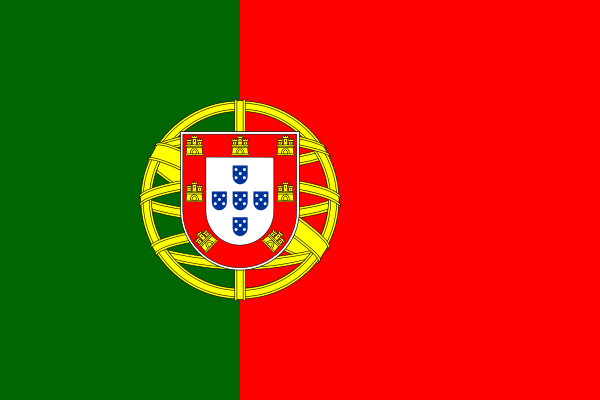
The flag of Portugal is composed of two vertical bands of green and red in the ratio of 2:3, with the coat of arms of Portugal centered over the two-color boundary.
Location
Quick Facts
Alpha 2
PTAlpha 3
PRTNumber
620TLD
.ptCapital
LisbonPopulation
10,305,564Area
92,090 km²Languages
Currencies
Drives on
RightWeek starts
MondayTimezones
UTC-01:00, UTCCoat of Arms

What is the Flag of Portugal?
The flag of Portugal is divided vertically into two fields, green on the hoist side and red on the fly side, with the two colours meeting directly and no stripe between them. Centred over the join is the national coat of arms, set on a yellow armillary sphere. The green field is the narrower of the two.
What Does the Portugal Flag Look Like?
The flag of Portugal is divided vertically into two fields: green on the hoist side and red on the fly side, with the green portion narrower than the red. Centred over the line where the two colours meet is the national coat of arms, which includes a yellow armillary sphere and a shield. There is no white stripe on the flag.
What is the Portugal Flag Called?
The Portugal flag is officially called the "Bandeira de Portugal" or "Flag of Portugal". It is also known as the "verde-rubra" (green and red) due to the two colors in the flag.
What Does the Portugal Flag Represent?
Red was chosen as the warm, virile colour of conquest, and green represented hope and the republican revolution of 1910. The armillary sphere recalls Portugal''s Age of Discoveries, and the national shield is set over it.
Source: Wikipedia, Flag of Portugal.
Who Created the Portuguese Flag?
The flag was designed by a commission that included Columbano Bordalo Pinheiro, Joao Chagas and Abel Botelho, and was adopted in 1911.
Source: Wikipedia, Flag of Portugal.
Bordering Countries
Similar Flags
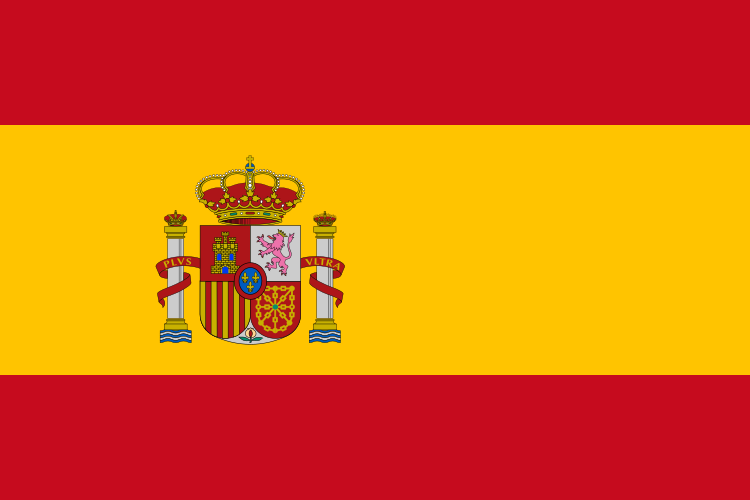
Flags that share colours with Portugal